

Description
Abaqus Unified Viscoplasticity UMAT | Ti-6Al-4V Tutorial
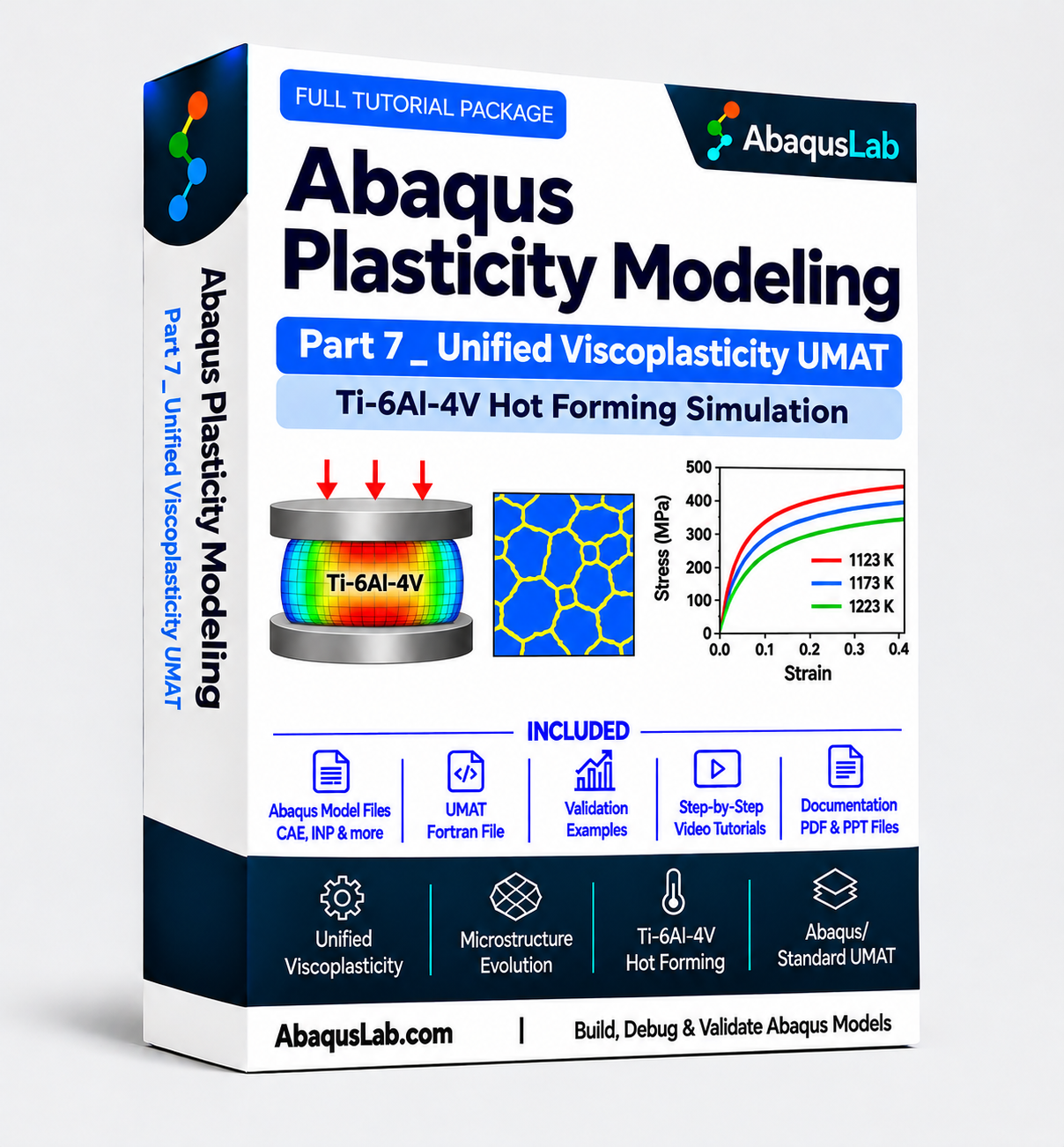
This Abaqus Unified Viscoplasticity UMAT tutorial explores a microstructure-informed constitutive model for titanium alloy hot deformation using an Abaqus Ti-6Al-4V UMAT in Abaqus/Standard. The Abaqus Viscoplasticity Tutorial connects rate-dependent flow, dislocation density evolution, alpha-phase globularisation, and phase transformation to Ti-6Al-4V Hot Forming Simulation. Through Abaqus Microstructure Evolution Modeling and Abaqus Thermo-Viscoplastic Modeling, you will study how temperature, strain rate, and evolving material state influence flow stress and softening.
This tutorial builds on the verified peer-reviewed research paper , published in the International Journal of Mechanical Sciences, adapting its unified viscoplastic constitutive framework, dislocation density evolution, globularisation, and phase transformation mechanisms into a practical Abaqus/Standard UMAT tutorial for Ti-6Al-4V hot forming simulation.
What Is Abaqus Unified Viscoplasticity UMAT for Ti-6Al-4V Hot Forming?
Abaqus Unified Viscoplasticity UMAT is a user-defined material formulation that describes time-dependent inelastic deformation through a coupled set of constitutive and internal-variable evolution equations. For an Abaqus Ti-6Al-4V UMAT, this approach can represent the effects of temperature, strain rate, hardening, and microstructural softening on hot-deformation flow stress. Unlike a simple empirical flow-stress curve, a unified model updates material state variables during the simulation.
What Does the Abaqus Viscoplasticity Tutorial Explain?
The Abaqus Viscoplasticity Tutorial explains how a constitutive model relates stress to viscoplastic strain rate and how internal variables evolve with deformation. The focus is the relationship between Ti-6Al-4V hot-compression behavior, dislocation hardening, microstructure-driven softening, and an Abaqus/Standard Fortran UMAT implementation.
How Does Ti-6Al-4V Hot Forming Simulation Account for Strain Rate and Temperature?
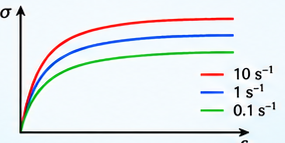
Ti-6Al-4V Hot Forming Simulation requires constitutive response appropriate to elevated temperatures and forming strain rates. The research model motivating this tutorial examines hot-compression conditions from approximately 1093 to 1293 K and strain rates from 0.1 to 10 s−1. Material response depends on the calibration range, thermal conditions, and evolving microstructure; extrapolation outside the validated range requires caution.
What Is Abaqus Microstructure Evolution Modeling for Ti-6Al-4V?
Abaqus Microstructure Evolution Modeling links internal state variables to the deformation mechanisms that affect macroscopic flow stress. In the paper-based Ti-6Al-4V formulation, relevant mechanisms include dislocation density evolution, alpha-phase globularisation, and alpha–beta phase transformation. Their influence is represented through constitutive evolution laws rather than explicit geometric resolution of individual grains.
How Does Abaqus Thermo-Viscoplastic Modeling Describe Thermal Softening?
Abaqus Thermo-Viscoplastic Modeling captures the dependence of viscoplastic flow on temperature and can account for heating caused by inelastic work when an appropriate thermal formulation is used. The constitutive update must receive a physically consistent temperature history; fully coupled thermal–mechanical behavior depends on the chosen Abaqus procedure and implementation, not on the UMAT name alone.
How Is a Unified Viscoplasticity UMAT Implemented in Abaqus/Standard?
A Fortran UMAT receives strain increments, temperature, material parameters, and the previous internal state. The subroutine integrates the constitutive equations, updates STRESS and STATEV, and supplies DDSDDE to support the implicit Newton solution. Robust implementation requires consistent time integration, state-variable bounds, and numerical convergence checks.
How Should an Abaqus Ti-6Al-4V UMAT Be Validated?
Validation begins with material-point or single-element tests at selected temperatures and strain rates. Compare simulated flow-stress curves with measured hot-compression data, then inspect hardening, peak stress, post-peak softening, and internal-variable histories. Mesh sensitivity, increment sensitivity, and thermal assumptions should be checked before using the model in a forming simulation.
Abaqus Unified Viscoplasticity UMAT — Ti-6Al-4V Constitutive Model and Governing Equations
The following LaTeX equations reproduce the constitutive relationships in steady state hot forming conditions, Materials Science and Engineering: A 559 (2013), 352–358. These describe phase-dependent plastic flow, dislocation hardening, adiabatic heating, phase transformation, globularisation and elastic stress.
Alpha-phase viscoplastic strain rate — Eq. (7)
Temperature-dependent alpha-phase flow law.
Beta-phase viscoplastic strain rate — Eq. (8)
Beta-phase flow includes globularisation-induced softening through w.
Total viscoplastic strain rate — Eq. (9)
Phase-fraction-weighted alpha and beta plastic flow.
Dislocation density evolution — Eq. (10)
Competition between dislocation accumulation and recovery.
Dislocation hardening — Eq. (11)
Hardening depends on the square root of normalized dislocation density.
Adiabatic temperature rise — Eq. (12)
Temperature increase associated with plastic work.
Beta-phase transformation — Eq. (13)
Evolution of beta-phase fraction due to the thermal history.
Globularisation evolution — Eq. (14)
Evolution of alpha-phase globularisation driven by beta-phase strain rate.
Elastic stress relation — Eq. (15)
Elastic response after subtracting plastic strain from total strain.
What Does the Abaqus Viscoplasticity Tutorial Cover?
This Abaqus Unified Viscoplasticity UMAT learning path combines Abaqus Microstructure Evolution Modeling with practical Ti-6Al-4V Hot Forming Simulation, including constitutive equations, state-variable updates, Abaqus/Standard implementation, and numerical verification.
Unified Viscoplasticity
Rate-dependent inelastic constitutive behavior.
Ti-6Al-4V Hot Forming
Temperature and strain-rate effects on titanium alloy flow.

Dislocation Density
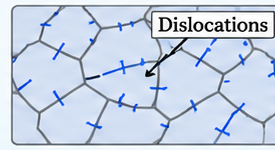
Hardening, recovery, and state evolution.
Alpha Globularisation
Morphology-related flow softening.
Phase Transformation
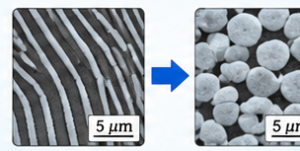
Alpha–beta phase evolution during thermal loading.

Thermal Softening
Temperature sensitivity and deformation heating.
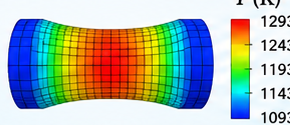
Constitutive Equations
Flow laws and internal-variable evolution.

Fortran UMAT
Stress, state variables, and DDSDDE.

Material Calibration
Hot-compression flow-curve parameter identification.
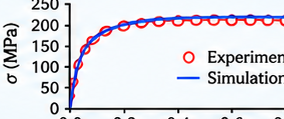
Single-Element Verification
Controlled tests of stress updates.
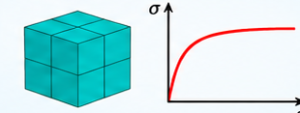
Abaqus/Standard Setup
Material definition, steps, and user subroutine.
Results Interpretation
Flow stress and microstructure state histories.
Recommended Prerequisite for Abaqus Ti-6Al-4V UMAT — Plasticity Part 7
Learn Abaqus UMAT Fundamentals Before Unified Viscoplasticity Modeling
Part 7 builds on the Fortran UMAT interface, implicit stress updates, state variables, and constitutive Jacobian introduced in Part 1 — Abaqus UMAT Fundamentals. Beginners should complete Part 1 before studying the advanced Ti-6Al-4V microstructure-based viscoplastic model. Experienced UMAT developers may begin with Part 7 directly.
Recommended learning sequence:
Abaqus Plasticity Modeling Learning Paths & Recommended Packages — Parts 1–8
The AbaqusLab Plasticity Modeling Series begins with Part 1 — UMAT fundamentals for static/implicit plasticity and Part 2 — VUMAT fundamentals for dynamic/explicit plasticity. Select advanced tutorials based on your application: Barlat–Yoshida–Swift (Part 3), Hill48 (Part 4), Johnson–Cook UMAT (Part 5), Johnson–Cook VUMAT (Part 6), Unified Viscoplasticity for Ti-6Al-4V (Part 7), or Overstress & Cap Viscoplasticity (Part 8). Recommended approach: Choose Part 1 for UMAT applications or Part 2 for VUMAT applications, then add the advanced parts you need. Each advanced tutorial may also be purchased independently.
Part 1 — Abaqus UMAT Fundamentals for Static Plasticity
- 🔹 Abaqus UMAT subroutine fundamentals
- 🔹 Fortran programming and UMAT implementation
- 🔹 Plasticity constitutive equations
- 🔹 Return mapping, debugging and validation
Part 2 — Abaqus VUMAT Fundamentals for Dynamic Plasticity
- 🔹 Abaqus VUMAT and Fortran fundamentals
- 🔹 Abaqus/Explicit material modeling
- 🔹 Stress updates and state variables
- 🔹 Foundation for advanced VUMAT tutorials
Parts 1 + 2
UMAT & VUMAT Fundamentals
Learn Abaqus/Standard and Abaqus/Explicit user-material programming.
Part 3 — Barlat–Yoshida–Swift Plasticity UMAT
- 🔹 Barlat2004-18p anisotropic yield function
- 🔹 Yoshida–Uemori kinematic hardening
- 🔹 Swift isotropic hardening
- 🔹 Advanced UMAT implementation
Build Your Own AbaqusLab Bundle
- Search all eligible tutorials and select any combination.
- Save 25% with 2 tutorials, with discounts increasing up to 55% for 8 or more.
- See your bundle total instantly and proceed to WooCommerce check0ut.
Part 4 — Hill48 Anisotropic Plasticity UMAT
- 🔹 Hill48 anisotropic yield criterion
- 🔹 Hill48 UMAT Fortran implementation
- 🔹 Directional plasticity and anisotropy
- 🔹 Stress–strain response and validation
Part 5 — Johnson–Cook Plasticity UMAT
- 🔹 Johnson–Cook constitutive formulation
- 🔹 Strain-rate-dependent plasticity
- 🔹 Temperature-dependent material behavior
- 🔹 UMAT implementation in Abaqus/Standard
Part 6 — Johnson–Cook Plasticity VUMAT
- 🔹 Johnson–Cook constitutive formulation
- 🔹 Explicit dynamic material modeling
- 🔹 High-strain-rate deformation
- 🔹 VUMAT stress updates and state variables
Part 7 — Unified Viscoplasticity UMAT — Ti-6Al-4V
- 🔹 Ti-6Al-4V hot forming
- 🔹 Microstructure-based viscoplasticity
- 🔹 Dislocation evolution and globularisation
- 🔹 Phase transformation and thermal softening
Part 8 — Viscoplasticity UMAT — Overstress & Cap Plasticity
- 🔹 Overstress-based viscoplastic flow
- 🔹 Pressure-sensitive yield surfaces
- 🔹 Tensile cutoff and cap plasticity
- 🔹 Implicit stress integration
Parts 1 + 3 + 4
UMAT + Barlat–Yoshida + Hill48
For anisotropic metals, sheet forming, and advanced hardening models.
Parts 2 + 6
VUMAT + Johnson–Cook Plasticity
For explicit dynamic modeling and user-defined Johnson–Cook material behavior.
Parts 1 + 7 + 8
UMAT + Two Viscoplasticity Models
For rate-dependent constitutive models and hot-forming applications.
Build the Full Abaqus Plasticity Bundle — Parts 1–8
- UMAT and VUMAT fundamentals
- Barlat–Yoshida–Swift and Hill48 anisotropic plasticity
- Johnson–Cook plasticity in Abaqus/Standard and Abaqus/Explicit
- Unified viscoplasticity for Ti-6Al-4V hot forming
- Overstress & cap viscoplasticity
- All eight numbered tutorials in one package
What You Receive with This Abaqus Unified Viscoplasticity UMAT Tutorial
The Abaqus Ti-6Al-4V UMAT package is intended to support study of rate-dependent constitutive equations, microstructure-driven softening, and Abaqus Thermo-Viscoplastic Modeling. The exact downloadable files and video coverage should be checked against the completed product package before publication.
Unified Viscoplasticity and Ti-6Al-4V Tutorial Videos
Ti-6Al-4V UMAT Source Code, Abaqus Models & Materials
Abaqus Unified Viscoplasticity UMAT Tutorial — Learning Sequence
Ti-6Al-4V Hot Forming Simulation — UMAT Verification Workflow
What You Will Learn with Abaqus Microstructure Evolution Modeling
Understand Viscoplastic Flow
Interpret strain-rate- and temperature-dependent flow.
Implement a Ti-6Al-4V UMAT
Connect Fortran routines with Abaqus/Standard.
Model Dislocation Evolution
Track hardening and recovery variables.
Model Globularisation
Represent microstructure-driven softening.
Evaluate Phase Transformation
Understand alpha–beta phase evolution.
Apply Thermal Coupling
Check temperature inputs and inelastic heating assumptions.
Calibrate Hot-Deformation Data
Compare responses at different temperatures and rates.
Validate Abaqus Results
Review flow curves, state variables, and convergence.
Who Is This Abaqus Ti-6Al-4V UMAT Tutorial For?
- Researchers studying titanium-alloy hot deformation and constitutive behavior
- Forming engineers modeling elevated-temperature metal processing
- Abaqus/Standard UMAT and Fortran developers
- MSc and PhD students studying unified viscoplasticity
- Analysts investigating microstructure-related flow softening
- Engineers calibrating temperature- and rate-dependent material models
Need Custom Abaqus Thermo-Viscoplastic Modeling or UMAT Development?
A custom Abaqus Unified Viscoplasticity UMAT may require calibration to Ti-6Al-4V hot-compression data, stable integration of microstructure evolution equations, and verification of thermal assumptions. AbaqusLab consulting can support constitutive implementation, debugging, and numerical validation for your application.
Abaqus Unified Viscoplasticity UMAT — Frequently Asked Questions
What is Abaqus Unified Viscoplasticity UMAT?
It is a Fortran user-material implementation of coupled rate-dependent inelastic constitutive equations for Abaqus/Standard, potentially including microstructure evolution variables.
What does the Abaqus Ti-6Al-4V UMAT model?
It describes titanium-alloy hot-deformation flow stress as a function of temperature, strain rate, and evolving internal material state, subject to the specific calibrated formulation.
What is included in the Abaqus Viscoplasticity Tutorial?
The planned technical scope covers unified constitutive equations, state-variable integration, Fortran UMAT implementation, and numerical verification.
Why is Ti-6Al-4V Hot Forming Simulation rate dependent?
At elevated temperatures, deformation mechanisms and flow stress depend strongly on strain rate, thermal conditions, and microstructural state.
What is Abaqus Microstructure Evolution Modeling?
It uses constitutive internal variables to represent processes such as dislocation density evolution, alpha-phase globularisation, and phase transformation.
How does Abaqus Thermo-Viscoplastic Modeling handle temperature?
Temperature enters the constitutive laws and may evolve through a suitable thermal or coupled procedure; the exact coupling depends on the implementation.
Does this tutorial use Abaqus/Standard or Abaqus/Explicit?
Part 7 targets Abaqus/Standard with UMAT. Abaqus/Explicit requires a different VUMAT interface.
What experimental data are relevant to validation?
Hot-compression flow-stress curves measured over several temperatures and strain rates, plus microstructural observations where available.
Is Part 1 required before Part 7?
Part 1 UMAT Fundamentals is recommended for beginners; experienced Fortran UMAT developers can study Part 7 independently.
How is Part 7 different from Part 8?
Part 7 focuses on microstructure-informed Ti-6Al-4V hot-forming viscoplasticity; Part 8 addresses overstress and pressure-sensitive cap viscoplasticity.
Related Abaqus UMAT, Viscoplasticity, Plasticity & Advanced Material Modeling Resources
Continue from Abaqus Unified Viscoplasticity UMAT to UMAT fundamentals, advanced plasticity, numerical automation, and materials research. These related resources support Abaqus Ti-6Al-4V UMAT development and broader constitutive simulation workflows.
1. RELATED PLASTICITY TUTORIALS
2. PLASTICITY SERIES & AUTOMATION
3. FRACTURE & MATERIAL MODELING
4. OTHER ADVANCED MATERIAL TUTORIALS
5. CONSULTING & SUPPORT
6. EXTERNAL RESOURCES & RESEARCH
Consult official Abaqus UMAT documentation and peer-reviewed Ti-6Al-4V hot-forming research for constitutive details and model calibration.


Reviews
There are no reviews yet.